Choosing cannabis can get confusing fast. One of the first things you’ll usually see on a menu is whether a strain is labeled Indica, Sativa, or Hybrid. Those labels can be useful, but they shouldn’t be the only thing you look at.
Here’s a simple way to understand what they mean and how to use them when choosing flower.
What is Indica?
Indica-labeled strains are commonly associated with a more relaxed, heavy, or laid-back experience.
That’s why people often look toward Indica when they want something for the end of the day or when they’re simply looking to slow things down.
But there’s an important catch: two different Indica strains can still feel very different.
The label gives you a general direction, not a guarantee.
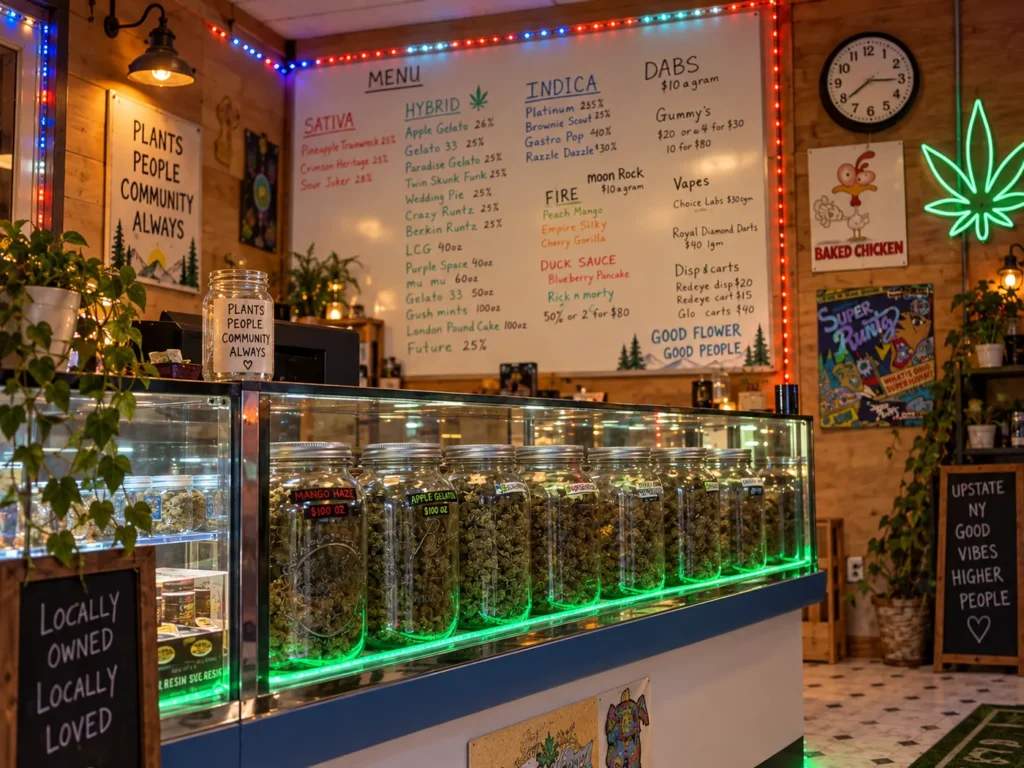
What is Sativa?
Sativa-labeled strains are traditionally associated with a more energetic, uplifting, or active experience.
You’ll often see Sativa strains described with words like:
- Energetic
- Creative
- Focused
- Uplifting
Again, think of this as a useful starting point rather than a promise about exactly how a strain will feel.
What is a Hybrid?
Hybrid strains combine characteristics associated with both Indica and Sativa.
Today, a large part of the cannabis market consists of hybrids, and there can be a huge range between them.
Some hybrids lean more toward the relaxed side. Others feel more uplifting. Some sit somewhere in between.
That’s one reason simply seeing “Hybrid” on the menu doesn’t tell you everything you need to know.
The Labels Don’t Tell the Whole Story
Modern cannabis is more complicated than three simple categories.
Research comparing cannabis samples has found that Indica and Sativa labels do not consistently match the overall genetic or chemical differences between strains. In other words, the labels are useful consumer shorthand, but they aren’t a perfect scientific classification system. (Nature)
How cannabis affects someone can also depend on things like THC concentration, previous experience, how much is consumed, the method of consumption, and individual biology. (CDC)
That’s why we recommend looking beyond the name on the label.
What Else Should You Look At?
THC
THC is the primary intoxicating cannabinoid in cannabis.
Higher THC generally means greater potential for intoxicating effects, but a bigger number doesn’t automatically mean a product is “better.”
Products with higher THC concentrations can produce stronger intoxicating effects and increase the chance of consuming more than intended. (CDC)
The Strain
Even within the same Indica, Sativa, or Hybrid category, different strains can have very different characteristics.
If you already know strains you enjoy, that can often be more useful than simply shopping by category.
How You Want to Feel
Sometimes the easiest place to start is with the experience you’re looking for.
At MuMu’s, you can browse around ideas such as:
- Relaxed
- Happy
- Energetic
- Creative
- Focused
- Uplifted
These descriptions are there to help narrow the menu, not to guarantee a particular result.
So Which One Should You Choose?
There isn’t one correct answer.
If you already know what you like, start with strains that are similar to what has worked for you before.
If you’re newer to cannabis, don’t feel like you need to understand every strain name or percentage on the menu. Start with the kind of experience you’re looking for, your preferred price range, and how strong you want the product to be.
And if you’re unsure, ask.
A good dispensary should make choosing cannabis easier, not make you feel like you need to study before walking through the door.
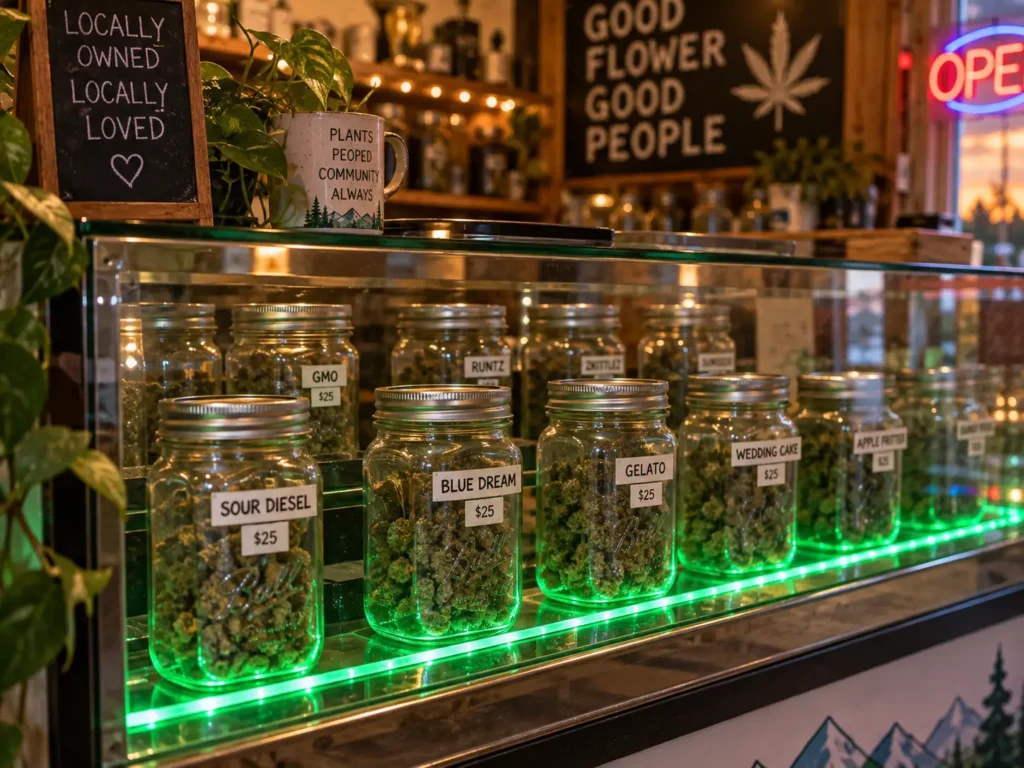
At MuMu’s, we keep a large rotating flower selection across different strains, price levels, and styles, so there’s usually more than one good option to choose from.